Interlinked Smoke & Heat Alarm Installation
We supply and fit Aico interlinked smoke and heat alarms that meet Scotland's fire alarm standard, typically £250–£450 for a three-bedroom home in Glasgow and Central Scotland.
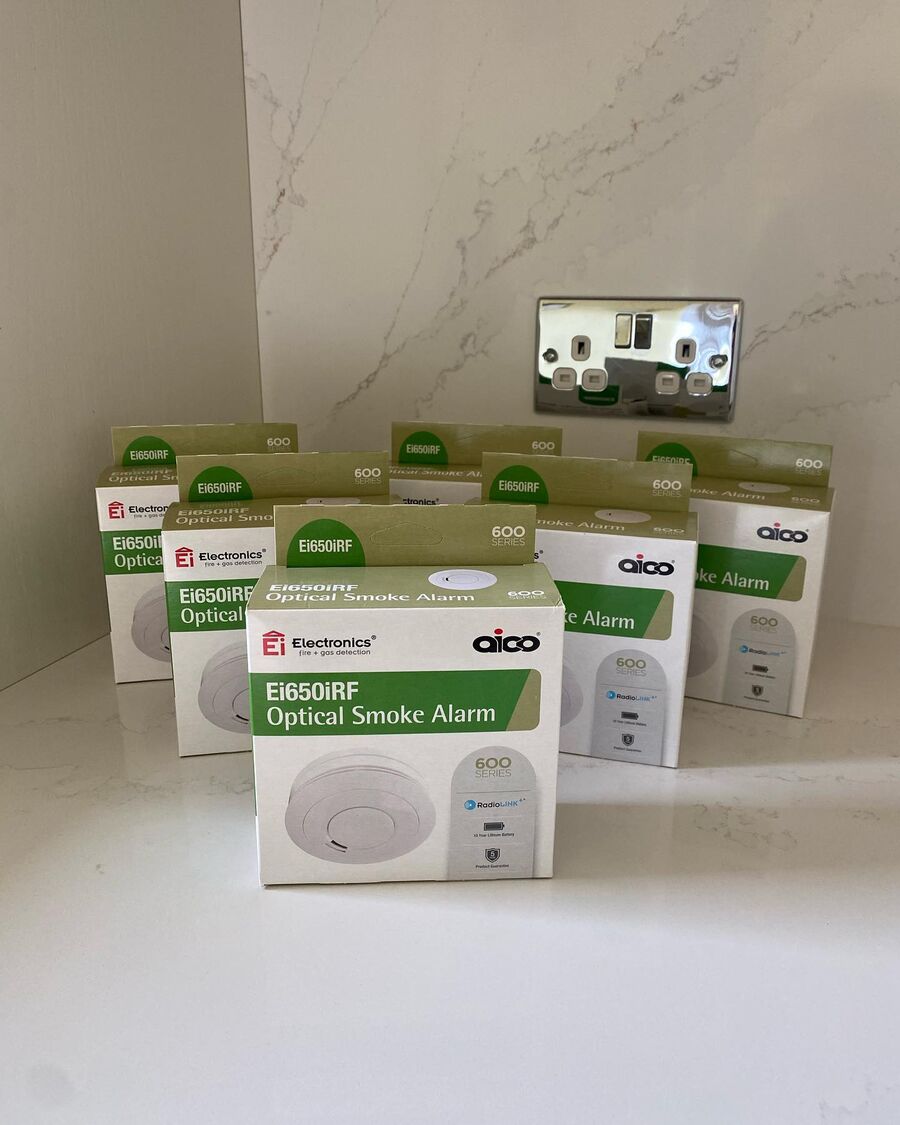
Bunker supplies and fits interlinked smoke and heat alarms for homes across Glasgow and Central Scotland. We use Aico alarms with sealed lithium batteries that link to each other wirelessly, so when one goes off, they all go off. Fitting typically costs £250–£450 for a three-bedroom home, and we confirm the price for your home before any work starts. Call 0141 478 0960 or WhatsApp 07397 901 411 for a quote.
What Scotland's fire alarm law asks for
Every home in Scotland must have interlinked fire alarms. The Scottish Government guidance says each home needs:
- one smoke alarm in the living room, or the room you use most
- one smoke alarm in every hallway and landing
- one heat alarm in the kitchen
- a carbon monoxide alarm in any room with a carbon-fuelled appliance, such as a boiler, open fire or wood burner
Smoke and heat alarms go on the ceiling and must be interlinked. The carbon monoxide alarm does not need to be linked to them. Our guide to Scotland's smoke and heat alarm law covers flats, open-plan rooms, landlords and the official sources.
Last reviewed: October 2026.
The alarms we fit
We fit Aico interlinked alarms with sealed, tamper-proof, long-life lithium batteries. This is one of the two types of alarm the Scottish Government accepts. The other is mains-wired alarms fitted by an electrician.
Sealed battery alarms suit most existing homes because there is no wiring to run between rooms. The batteries can last up to 10 years, and the whole alarm is replaced at the end of its life.
- Smoke alarms for the living room, hallways and landings.
- A heat alarm for the kitchen, where cooking would set off a smoke alarm.
- A carbon monoxide alarm in the room with your boiler, fire or stove. See carbon monoxide alarms for where these are needed.
Which rooms need an alarm: a three-bedroom example
A typical two-storey, three-bedroom house needs three smoke alarms (living room, downstairs hall and upstairs landing), one heat alarm in the kitchen and, if there's a boiler, one carbon monoxide alarm. That matches the Scottish Government's own example of an average three-bedroom home.
Bedrooms don't need an alarm under the standard, although you can add one. A flat on one level often needs fewer alarms.
In an open-plan room, one alarm can cover the space if it is no more than 7.5 metres from any point in the room. If the space includes the kitchen, it should be a heat alarm.
Price
Interlinked smoke and heat alarm installation typically costs £250–£450 for a three-bedroom home. That covers the alarms, a carbon monoxide alarm where you need one, and fitting.
The final price depends on how many rooms, hallways and landings you have. We confirm the price for your home before any work starts.
What happens on the day
- We arrive at the time we've agreed with you.
- The engineer walks round with you and confirms where each alarm will go, following the guidance and Aico's instructions.
- Each alarm is fixed to the ceiling and linked to the others.
- We test the system, so you hear every alarm sound when one is triggered.
- We show you how to test your alarms yourself.
If your ceilings might contain asbestos, tell us when you book. The government guidance says battery alarms can be fixed with a firm adhesive so the ceiling isn't disturbed.
Landlords, flats and businesses
Private landlords must provide interlinked smoke and heat alarms too. In a tenement or block of flats, your alarms don't need to link to your neighbours' alarms, and you don't need alarms in the close or stairway. The smoke alarm law guide has the detail.
For shops, offices and farm buildings, see our commercial fire alarm systems.
Get a price
Call 0141 478 0960, or 01506 333 102 for our West Lothian office, or WhatsApp 07397 901 411. Tell us how many floors, hallways and landings your home has, and whether you have a boiler, open fire or wood burner.
If you're also thinking about a house alarm, get an instant burglar alarm price and we can quote for both. You can also read about our burglar alarm installation.
Frequently Asked Questions
How much does it cost to fit interlinked smoke alarms in Scotland?
With Bunker, installing interlinked smoke and heat alarms typically costs £250–£450 for a three-bedroom home in Glasgow or Central Scotland. That includes the alarms, a carbon monoxide alarm where you need one, and fitting. The price depends on the number of rooms, hallways and landings, and we confirm it before any work starts.
Do smoke alarms need to be hardwired in Scotland?
No. The Scottish Government accepts either sealed, tamper-proof alarms with long-life lithium batteries, or mains-wired alarms fitted by a qualified electrician. Both types link to each other by radio and don't need wifi. We fit Aico sealed lithium-battery alarms, so no new wiring is needed.
Can I fit interlinked smoke alarms myself?
Yes. The government guidance says you can fit sealed battery alarms yourself, while mains-wired alarms need a qualified electrician. Many people prefer an installer so each alarm goes in the right place and the whole system is tested together. If you'd like us to fit yours, call 0141 478 0960.
How long do sealed battery smoke alarms last?
The Scottish Government says the long-life lithium batteries in sealed alarms can last up to 10 years. The battery can't be changed, because the sensors wear out over time, so the whole alarm is replaced at the end of its life. Each alarm states how long it lasts.
Do you fit interlinked alarms in flats?
Yes, we fit alarms in houses and flats across Glasgow and Central Scotland. In a flat, your alarms don't need to link to your neighbours' alarms, and communal closes and stairways don't need alarms. If you let the flat, the same standard applies; our smoke alarm law guide explains what landlords must do.
Need interlinked smoke and heat alarms fitted?
Get free advice on installing, upgrading or replacing your security system. No obligation, no hard sell - just honest advice from local experts.