Carbon Monoxide Alarms: Installation and the Rules in Scotland
If your home has a boiler, open fire, wood burner or other carbon-fuelled appliance, Scotland's rules say you need a carbon monoxide alarm in that room. We fit them across Glasgow and Central Scotland.
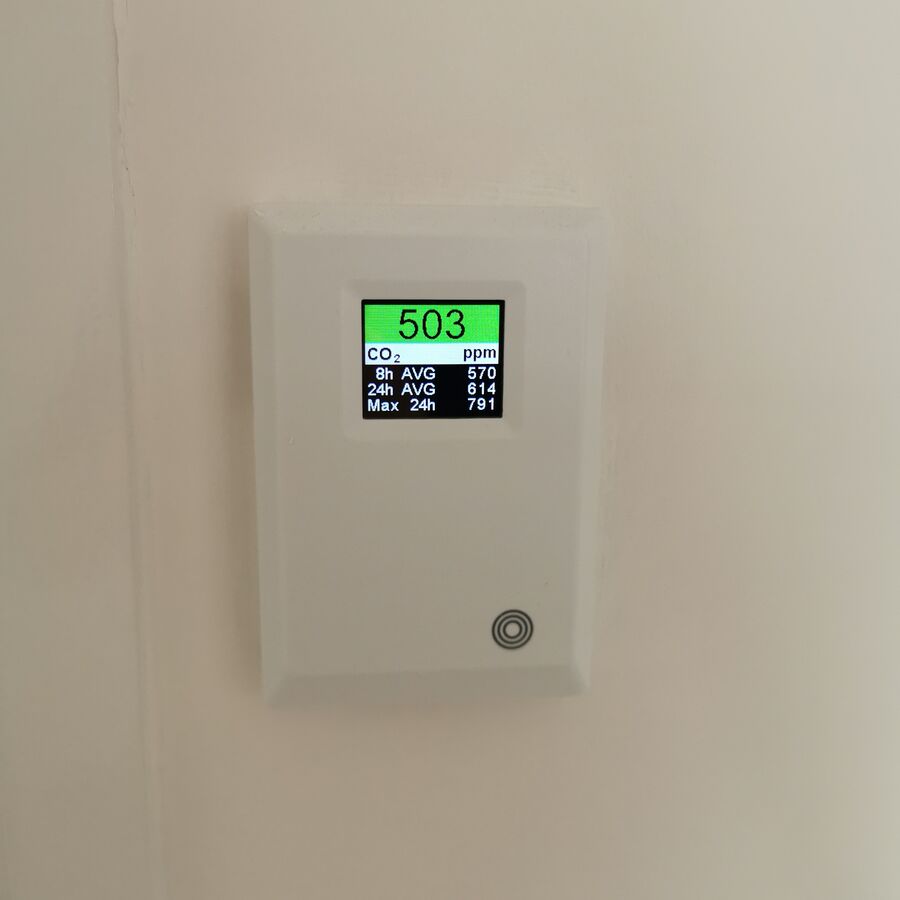
You need a carbon monoxide (CO) alarm in any room with a carbon-fuelled appliance, such as a gas or oil boiler, open fire, wood burner or non-electric heater, or with a flue. Gas cookers and hobs don't need one, and the CO alarm doesn't have to be linked to your smoke alarms. Bunker fits CO alarms across Glasgow and Central Scotland, on their own or with interlinked smoke and heat alarms.
You may see these called CO2 detectors. The gas that matters here is carbon monoxide (CO), not carbon dioxide (CO2).
Last reviewed: October 2026.
Where you need a carbon monoxide alarm
The Scottish Government's Tolerable Standard guidance says a CO alarm should be fitted in every room with:
- a fixed appliance that burns gas, oil or solid fuel, such as a boiler, open fire, heater or stove
- a flue
You don't need one for a gas cooker or hob. Cellars, attics and garages that aren't used as living space don't fail the standard without one, but building regulations may require one if you install or replace an appliance there.
The rule applies to every home in Scotland, whether you own it or rent it.
Does a CO alarm need to be interlinked?
No. The Scottish Government guidance says the CO alarm does not need to be linked to the smoke alarms, and the Tolerable Standard doesn't require CO alarms to be interlinked at all. Your smoke and heat alarms do need to be interlinked with each other.
What a compliant CO alarm looks like
- It meets British Kitemark EN 50291-1.
- If it runs on batteries, the battery is sealed for the alarm's lifespan, which can be up to 10 years. Fixed-wired mains CO alarms with a sensor-failure warning are also allowed, but plug-in types are not.
- It is fixed on the ceiling at least 300 mm from any wall, or on a wall at least 150 mm below the ceiling and higher than any door or window, unless the manufacturer says otherwise.
- It sits between 1 and 3 metres from the appliance, and not inside a cupboard. Don't fit it right next to a gas cooker or hob, as that can cause false alarms.
What we do
We check which rooms have a boiler, fire, stove or flue, and fit a sealed-battery CO alarm in each one, positioned to the guidance and the manufacturer's instructions. We test each alarm and show you how to test it yourself.
A CO alarm warns you about a problem; it doesn't fix the cause. Keep your boiler, fires, stoves and flues serviced by a qualified engineer.
If your CO alarm goes off
- Stop using any appliance you think might be producing CO, if you can.
- Open doors and windows, get everyone outside, and don't go back in until you've had advice.
- If you think a gas appliance is leaking CO, call the free National Gas Emergency Service on 0800 111 999.
- Call 999 if anyone is struggling to breathe, suddenly confused or unconscious.
This follows NHS advice on carbon monoxide poisoning and HSE gas safety advice.
Price
A CO alarm is included, where you need one, in our interlinked smoke and heat alarm installation, which typically costs £250–£450 for a three-bedroom home. For a CO alarm on its own, call 0141 478 0960 or WhatsApp 07397 901 411 for a price. We confirm the price before any work starts.
For the full picture, including flats and landlords, read our guide to Scotland's smoke and heat alarm law.
Frequently Asked Questions
Do I need a carbon monoxide alarm in Scotland?
Yes, if your home has a carbon-fuelled appliance such as a boiler, open fire, wood burner or non-electric heater, or a flue. The alarm goes in the same room as the appliance. This applies to all homes in Scotland, whether owned or rented.
Does a carbon monoxide alarm need to be linked to my smoke alarms?
No. Both gov.scot and mygov.scot say the carbon monoxide alarm does not need to be linked to the fire alarms. Your smoke and heat alarms must be interlinked with each other.
Do I need a carbon monoxide alarm for a gas cooker or hob?
No. Gas cookers and hobs don't need a CO alarm, and you shouldn't fit one right next to a gas cooking appliance, because it can cause false alarms. You still need one in any room with a boiler, fire, stove or flue.
Where should a carbon monoxide alarm be fitted?
In the same room as the appliance, between 1 and 3 metres from it, and not inside a cupboard. It should be on the ceiling at least 300 mm from any wall, or on a wall at least 150 mm below the ceiling and above any door or window, unless the manufacturer's instructions say otherwise.
Need a carbon monoxide alarm fitted?
Get free advice on installing, upgrading or replacing your security system. No obligation, no hard sell - just honest advice from local experts.